Use a desktop computer for the best viewing experience of Synarchia

Synarchia Energy
Powering a Decentralised Future: Emergent Autonomy and the Energy Sector
Energy is the foundation of civilisation. It fuels everything—from the food we grow and the homes we heat to the devices we use for communication. Yet, in most parts of the world, energy remains one of the most centralised and controlled resources. A handful of corporations and government agencies dictate energy production, distribution, and pricing, leaving individuals and communities dependent on distant authorities for access to power.
Emergent autonomy in energy challenges this model. It envisions a future where individuals and communities generate, store, and distribute their own energy, free from centralised control. It’s about breaking away from monopolised grids and creating localised, resilient, and self-sustaining power networks.
The Problem with Centralised Energy Systems
Most modern energy grids are built on centralised control and distribution, which presents several critical issues:
Vulnerability to Failures: A single failure in the system—a natural disaster, cyberattack, or even government mismanagement—can leave entire regions without power.
Economic Exploitation: Energy companies operate as monopolies or oligopolies, dictating prices with little competition, leaving consumers powerless.
Political Control: Energy is often used as a tool of control, with authorities deciding who gets access, at what price, and under what conditions.
Environmental Destruction: Large-scale energy production, particularly from fossil fuels, prioritises profit over sustainability, leading to environmental degradation.
The existing system is designed to create dependency, ensuring that people rely on corporate and government providers for their basic energy needs. Emergent autonomy in energy is about reclaiming that power—literally and figuratively.

High-performance, low-emission hemp bio-fuel engineered to power the future - without costing the planet.
The Principles of Energy Autonomy
For energy to be truly autonomous, it must be:
Locally Produced – Communities and individuals must be able to generate their own power from renewable sources like solar, wind, hydro, and biomass.
Decentralised in Storage & Distribution – Energy must be stored in localised battery networks or micro-grids, ensuring resilience even when larger systems fail.
Open and Cooperative – Energy should not be controlled by a few corporations but shared freely or fairly traded within communities.
The goal is not simply to switch from fossil fuels to renewable energy within the same centralised structure—it’s about dismantling centralised control entirely.
Building a Decentralised Energy Network
Personal and Household Energy Independence
The first step toward emergent autonomy in energy starts at the individual level. Households can adopt:
Solar panels and small-scale wind turbines to generate their own power.
Battery storage systems (like lithium-ion, graphene-based, or alternative gravity/flywheel solutions) to ensure consistent power.
Energy-efficient appliances and smart grids to reduce overall energy consumption.
Heat capture and bio-energy solutions to minimise reliance on external power sources.
By taking control of personal energy production, individuals become less reliant on external grids and reduce their exposure to corporate price hikes or supply restrictions.
Community Energy Cooperatives
Moving beyond individual autonomy, neighbourhoods and local groups can collaboratively manage energy resources:
Microgrids – Small, localised energy networks that operate independently or in parallel with national grids.
Energy Sharing Systems – Excess energy from one household or building can be distributed to others in real-time using smart contracts and decentralised trading platforms.
Community-Owned Renewable Projects – Cooperatively funded wind farms, solar fields, or hydroelectric stations allow entire regions to generate their own power.
These community-driven approaches create resilience—even if centralised power sources fail, local grids remain operational.
Decentralised Energy Markets
Once local autonomy is established, communities can trade and distribute energy without centralised intermediaries:
Peer-to-Peer (P2P) Energy Trading: Individuals sell excess electricity to neighbours using blockchain-based contracts.
Energy Tokens and Local Currencies: Instead of relying on fiat money, localised energy economies can use cryptographic tokens or barter-based systems to manage energy exchanges.
Autonomous Pricing Models: AI-driven energy grids adjust prices dynamically based on real-time supply and demand, removing corporate manipulation.
These models ensure that power remains in the hands of those who generate it, rather than those who control the infrastructure.
The Role of Technology in Energy Autonomy
To make emergent autonomy in energy a reality, we must embrace technologies that enable decentralisation:
Blockchain & Smart Contracts: Secure, automated systems for energy trading and resource allocation without middlemen.
AI & Machine Learning: Optimising power distribution, predicting consumption patterns, and preventing energy waste.
Advanced Battery Storage: Innovations in solid-state, graphene-based, and gravity energy storage ensure reliable off-grid power solutions.
Mesh Networking & IoT: Devices communicating in real-time to optimise power distribution without centralised oversight.
Why This Matters
Energy is not just a commodity—it is the foundation of autonomy. Without control over power, individuals and communities remain at the mercy of centralised authorities.
True freedom requires energy independence.
Sustainability demands localised, community-driven energy production.
Resilience comes from decentralised networks, not fragile monolithic grids.
Emergent autonomy in energy is about taking back control—not waiting for governments or corporations to "allow" access to power, but building independent, self-sufficient energy systems from the ground up.
A decentralised future is only possible when the power—literally and metaphorically—belongs to the people.
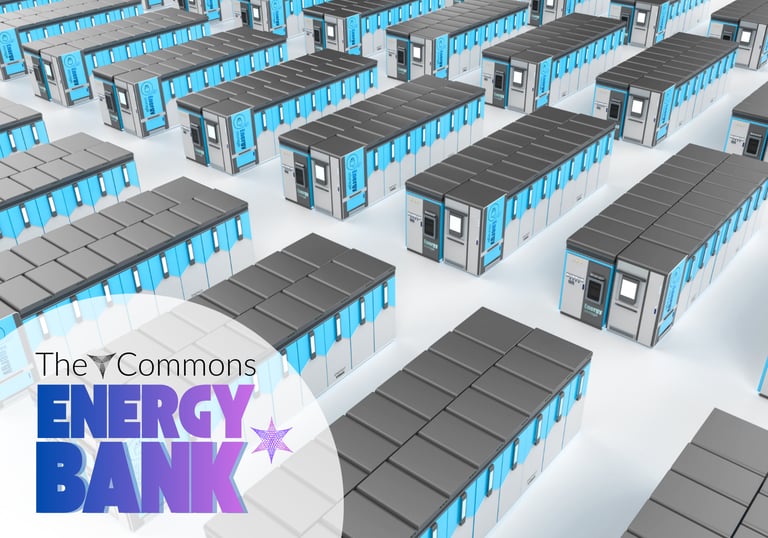
An energy bank, structured as a community-based energy micro-grid, represents an innovative approach to sustainable energy management and distribution. This local energy system is designed to generate, store, and distribute electricity within a community, often using renewable sources like solar, wind, or biomass.
By decentralising energy production, micro-grids enhance energy resilience, reduce reliance on traditional power grids, and lower carbon footprints. They empower communities to manage their energy needs more effectively, enabling cost savings and promoting energy independence.
Moreover, these systems can be tailored to meet the specific needs of a community, ensuring that energy resources are used efficiently and equitably.
Through the energy bank model, surplus energy can be stored or shared among community members, fostering collaboration and creating a more sustainable future.
By re-purposing shipping containers and utilising heat-resistant Hemp-based insulation, Energy Banks can be built sustainably.
Energy MicroGrid